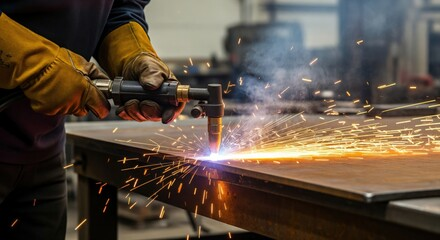
Boise Metal Fabrication is a complex process that uses advanced machinery and techniques to enhance precision and efficiency. It is integral to the automotive, aerospace and construction industries.
The most common materials used in metal fabrication are Steel, Aluminum, Copper and Brass. These metals possess unique properties that make them ideal for different applications.
Steel
Steel is one of the most common materials used in metal fabrication. It is a strong and versatile alloy that is used for everything from building frames to making tools and equipment. Steel is made by melting iron with carbon and other elements in a furnace to create various alloys that have different properties.
The carbon content in steel can vary from 0.05% to 2.5%, which gives rise to varying types of steel with different strengths and ductility. Low-carbon steel is very ductile and can be easily shaped and reformed, while high-carbon steel has higher strength but is less ductile. Structural steel is a category of steel that has been specifically designed and manufactured for use in load-bearing components and structural frames.
There are many other elements that can be melted with iron to create different steel alloys. For example, chromium is added to steel to protect it from corrosion by creating a layer of oxide that shields the iron from oxygen. Chromium also increases the resistance of the new material to heat and wear, while nickel and molybdenum increase its tensile strength.
The amount of carbon in steel and the additions of other elements make it possible to create thousands of different grades of steel. Mild steel, for instance, contains up to 99% iron and less than 0.2% carbon. Other elements, like manganese, silicon, phosphorus and sulfur can be added in smaller quantities to give the steel different properties.
The raw materials that go into the production of steel can be mined from the earth’s crust or recycled from old steel products. The process of turning the raw materials into steel involves casting, rolling and forming to produce semi-finished products that have the desired qualities for their intended application. In addition, the steel must undergo various testing and treatment processes to ensure it meets the appropriate quality standards. This can include soaking the steel in acid to remove impurities, sandblasting and deburring it to smooth its surfaces and coating or painting it with protective coatings. This helps the steel resist corrosion and other environmental hazards.
Aluminum
Aluminum is a versatile metal that can be used in a variety of fabrication applications. It has a lower density than steel, making it easier to handle, and is corrosion resistant in many environments. It also has a high strength-to-weight ratio, and can be formed into intricate shapes. This combination of properties makes it an excellent material for a wide range of applications, from aircraft parts to household appliances.
Aluminum’s unique atomic structure means that it can be made to have a variety of different properties, depending on the alloy used. This is why aluminum fabrication requires expertise that focuses on the specific characteristics of this metal. The process of fabricating aluminum is also a little different than working with other metals. Its softer nature makes it easy to bend and form into desired shapes, but it’s important to use the proper techniques when doing so.
One of the most common uses for aluminum in fabrication is electrical wires. Its low weight and high conductivity make it a better choice than copper for long distance power lines. In addition, its corrosion resistance helps protect the wires from environmental hazards.
Another common use for aluminum in fabrication is car parts. This includes components like frames, crumple zones and roofing elements as well as the bodies of cars themselves. Aluminum’s ability to withstand stress without losing its structural integrity is what allows it to be used in these kinds of vehicles.
It’s also found in laptops and tablets because of its ability to dissipate heat and provide a good feel for the device. It’s even found in the wings of airplanes because of its lightweight and corrosion-resistance. And, of course, it’s in your lunch box because it provides reliable protection for food while being hygienic and can be recycled.
Copper
Copper is a key material in metal fabrication, used in products that support modern life. It’s found in your phone, your solar panels, the wiring in your house and even your electric car.
Pure copper is soft and malleable, yet strong enough to be hammered flat into sheets or drawn into wires. It also conducts heat and electricity well, and its natural shine and durability make it an excellent choice for a variety of surface finishes. It can be alloyed with other elements to create different fabrication materials, such as brass (copper and tin) or nickel silvers (copper, nickel and zinc).
The most important use of copper is in construction. A typical home contains nearly 439 pounds of the metal, including pipes, tubing and electrical wiring. It’s easy to solder, making it a common component of plumbing and heating systems, as well as electrical wiring. Copper’s naturally antimicrobial properties help prevent the spread of harmful germs. Its surface interferes with the electrical charges in bacteria, fungus and viruses, interrupting their metabolism and causing them to die within two hours of contact. As a result, hospitals are replacing plastic and other metal fixtures with copper to reduce hospital-acquired infections.
Corrosion-resistant copper and copper alloys are used in industrial settings, including chemical and petrochemical plants. They’re also critical to the operation of undersea machinery, such as oil and gas drilling platforms or desalination machines. The booming green energy industry also uses a lot of copper. It’s an essential component of windmill turbines and battery energy storage systems, with demand projected to triple between 2022 and 2030.
Like steel, copper can be fabricated to meet almost any specifications. It’s available in a wide range of shapes and sizes, from thin sheets and plates to rods and tubes. It’s also frequently used in specialized applications, such as welding nozzles and soldering iron tips. For these applications, free-machining coppers are often used. These have been refined to eliminate impurities that can impede machining. They’re easier to work with and more affordable than pure copper. They’re also easier to machine, allowing for tighter tolerances and higher precision.
Brass
Brass is the resulting alloy from mixing copper and zinc. The standard composition can be altered by adding minute amounts of other metals, notably lead, tin, phosphorus and aluminum, to improve properties like strength, corrosion resistance or machinability. Brasses can also be toned to give them attractive brown or bronze finishes, often used in decorative and architectural applications.
The alloys most commonly used in metal fabrication are copper zinc, known as alpha and beta brasses. The higher copper content of the alpha brasses gives them more room temperature ductility, making them ideal for pressing, deep drawing, spinning and other cold working processes. The beta brasses are less ductile but much stronger, which makes them more suitable for the production of door and window fittings, faucet handles and similar hardware.
Both types of brass have excellent electrical conductivity, and can be used in the manufacture of electrical contacts, connectors and terminals. They are able to be machined with conventional tools and have good elongation, which is useful for forming intricate parts and tubing. The machinability of brasses is dependent on their temper. Untempered copper-zinc alloys are soft and easily deformed, but tempered grades are hard and workable, with high machinability.
Unlike steel, most brasses are non-magnetic, which is important for many applications, particularly in medical and scientific equipment. In addition, the copper content of some brasses has bactericidal properties that are effective against MRSA and VRSA, so they can be safely used in healthcare environments without additional protective coatings or chemicals.
Brasses are widely used in power generation and petrochemicals. Their machinability, corrosion resistance and good thermal conductivity make them a reliable choice for use in power station condensers, solar heating and petrochemical plant equipment. In addition, the low melting point of brass makes it an excellent material for nuclear reactors and fuel cells.